I’ve tested hundreds of gaming setups and the difference between standard gear and quality accessories is night and day.
You’re probably dealing with at least one of these issues right now: your mouse feels sluggish during critical moments, your headset hurts after an hour, or you’re missing audio cues that better players are catching. These aren’t small problems. They’re holding you back.
Here’s what most gamers don’t realize: the gear that came with your setup was designed to be good enough. Not great. Just enough to work.
I’ve spent years testing gaming gear ScookieGear and other hardware to figure out what actually makes a difference. Not what looks cool in marketing photos. What performs when it matters.
This guide breaks down how the right accessories change your gaming sessions. Better response times. Real comfort during long plays. Audio that lets you hear what’s happening around you.
We’re not talking about expensive upgrades for the sake of it. We’re talking about fixing the specific problems that affect your performance and enjoyment.
You’ll learn which accessories solve real issues and which ones are just hype. What to prioritize based on the games you play. And why some upgrades matter more than others.
No fluff. Just what works and why it works.
The Foundation of Victory: High-Precision Gaming Mice
Beyond Point-and-Click: Why Your Mouse is Your Most Critical Tool
I’ll never forget the moment I realized my mouse was holding me back.
I was grinding ranked matches in Valorant and kept missing flick shots I knew I could hit. My crosshair would land just off target. Every. Single. Time.
My first thought? I’m washed up.
Then I borrowed a friend’s gaming mouse for one session. The difference was immediate. My tracking felt smooth. My flicks landed. It wasn’t magic. It was just better hardware.
Here’s what most people don’t get about gaming mice. They think any mouse works fine as long as it clicks. But when you’re playing at a competitive level, your mouse is the bridge between what you see and what happens on screen.
A high-quality gaming mouse gives you three things that matter. Superior accuracy that puts your crosshair exactly where you want it. Faster response times that register your clicks in milliseconds instead of… whenever. And ergonomic comfort that lets you play for hours without your hand cramping up.
That last one sounds boring until you’re three hours into a tournament and your wrist feels like it’s on fire.
Now some people argue that skill matters more than gear. They say a good player can perform well with any mouse. And technically they’re right.
But why handicap yourself?
DPI and polling rate are where most people start when they look at gaming mice. DPI (dots per inch) controls how far your cursor moves based on physical movement. A mouse with 16,000 DPI sounds impressive until you realize you’ll probably use 800 to 1600 for most games.
What matters is having adjustable DPI. You want to switch sensitivity on the fly depending on what you’re doing.
Polling rate is simpler. It’s how often your mouse reports its position to your computer. A 1000Hz polling rate means your mouse updates 1,000 times per second. Anything less and you’re introducing lag between your hand movement and what happens on screen.
For serious gaming? 1000Hz is non-negotiable.
Sensor technology gets technical fast but here’s what you need to know. Optical sensors use light to track movement. Laser sensors use (you guessed it) lasers.
Optical wins for gaming. Laser sensors can track on more surfaces but they pick up too much detail. That means inconsistent tracking on mousepads. Optical sensors are reliable and that’s what you want when you’re lining up a headshot.
Every pro mouse uses optical sensors. There’s a reason for that.
Ergonomics and weight are personal. I use a palm grip where my entire hand rests on the mouse. My friend uses a claw grip with just his fingertips and palm touching. Neither is wrong.
What’s wrong is using a mouse that doesn’t match your grip style. A mouse designed for palm grip feels awkward if you naturally claw grip. You’ll fight it the entire time you play.
Weight matters too. Some players want a heavy mouse for stability. Others want something light they can flick across the pad. I prefer lighter mice (around 70 grams) because I play low sensitivity and need to move my mouse a lot.
The gaming gear scookiegear community debates this constantly and honestly? Try different weights if you can. What feels right is right.
You can check out latest updates scookiegear for current recommendations on what’s worth buying right now.
Your mouse is the tool you use most when gaming. Getting this right changes everything else.
Mechanical Mastery: Keyboards Built for Speed and Accuracy
The Tactile Advantage of Mechanical Switches
You know that feeling when you’re mashing keys on a membrane keyboard and nothing happens?
Yeah, I hate that too.
Membrane keyboards feel mushy. The keys sink down with no real feedback and you’re never quite sure if you actually pressed them. When you’re in the middle of a heated match, that uncertainty costs you kills.
Mechanical switches are different. Each keypress gives you clear, immediate feedback. You feel exactly when the key registers and there’s no guessing involved.
Some people argue that membrane keyboards are fine for gaming. They’re cheaper and they get the job done. For casual play, maybe that’s true.
But here’s what they’re missing.
When you need speed and precision, mechanical switches win every time. The difference becomes obvious the moment you try to execute a combo or react to an enemy pushing your position.
Linear switches like Reds are smooth from top to bottom. No bump, no click. Just pure speed. If you play FPS games or anything that requires rapid inputs, these are your best bet. I’ve tested them extensively through scookiegear and the response time is noticeably faster.
Tactile switches like Browns give you a small bump when the key actuates. You feel it but you don’t hear much. Perfect if you game and work on the same keyboard (which most of us do).
Clicky switches like Blues are loud. Really loud. But they confirm every single keystroke with both feel and sound. Some players swear by them for rhythm games or MOBAs where timing matters.
Essential Gaming Features
Here’s what actually matters beyond the switch type.
N-key rollover means the keyboard registers every key you press at once. No matter how many. When you’re hitting multiple abilities while moving and aiming, you need this.
Anti-ghosting prevents phantom inputs. Without it, certain key combinations just don’t register. That’s how you end up standing still when you meant to strafe left while reloading.
Both features are standard on decent mechanical keyboards now. But cheaper models still skip them, so check before you buy.
Total Immersion: The Competitive Edge of Gaming Headsets
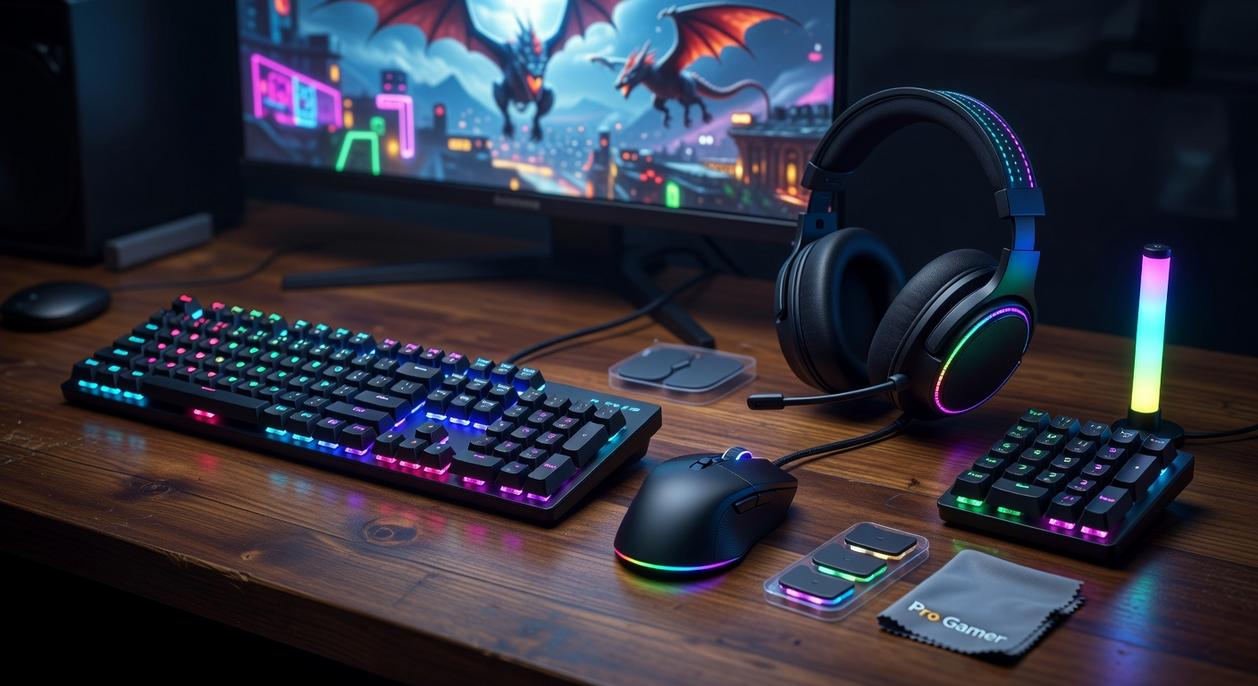
Hear Your Enemy Before You See Them
You know that moment when someone gets the jump on you and you have no idea where they came from?
Yeah. Your headset is probably the problem.
I’m not talking about hearing explosions or background music. I’m talking about the stuff that keeps you alive. Footsteps behind you. A reload two rooms over. The subtle crunch of someone crouch-walking through grass.
Some players say audio doesn’t matter that much. They claim good aim and map knowledge are all you need.
But here’s what I’ve seen after testing dozens of setups. Those players are the ones getting flanked. They’re reacting a full second slower because they’re relying on visuals alone.
A solid gaming headset gives you information before it shows up on your screen.
Virtual surround sound changes everything. Real 7.1 surround creates a full 360-degree soundscape around you. You’re not just hearing left or right anymore. You can tell if someone’s above you, behind you, or coming up the stairs to your left.
I think we’ll see this tech become standard in competitive play within the next two years (most pro players already won’t touch anything without it).
Driver size matters too. Those 50mm drivers in premium headsets produce a wider sound range. You get deeper bass for explosions but also clearer highs for picking out specific sounds. The difference between 40mm and 50mm drivers is like watching a game on a phone versus a monitor.
But audio quality means nothing if your team can’t hear you.
You need a noise-canceling microphone that actually works. Not one that picks up your keyboard, your fan, or your roommate yelling in the background. Clear comms win rounds. I’ve watched teams fall apart because someone’s mic was cutting out during callouts.
Here’s the part nobody talks about until it’s too late.
Comfort.
You can have the best audio in the world but if your ears are screaming after an hour, you’re done. Memory foam earcups that actually breathe. An adjustable headband that doesn’t feel like a vice grip. Lightweight construction that doesn’t make your neck sore.
(I once wore a heavy headset for a six-hour session and couldn’t turn my head properly for two days. Not my finest moment.)
The newest gaming gear scookiegear reviews show a clear trend toward lighter builds without sacrificing audio quality. I’m guessing by next year we’ll see sub-250-gram headsets with full 7.1 surround become the norm.
Your headset is your early warning system. Treat it that way.
The Unsung Heroes: Surfaces and Stability
Optimizing Your Battle Station for Peak Performance
Most gaming gear scookiegear reviews obsess over mice and keyboards.
But nobody talks about what’s underneath.
Gaming Mousepads come in two types. Control surfaces give you texture for precision tracking. Speed surfaces stay smooth so your mouse glides fast across the pad.
Which one do you need? Depends on your playstyle.
If you’re playing tactical shooters where every headshot counts, control pads help you nail those micro-adjustments. But if you’re flicking between targets in arena shooters, speed surfaces let you move without resistance.
Here’s what most people miss though. Size matters more than surface type. Low-sensitivity aiming (which most pros use) requires space to move your arm. A tiny pad forces you to lift and reset constantly.
Headset stands and cable management sound boring until a cable snag costs you a ranked match.
I’ve watched it happen. You’re clutching a 1v3 and your headset cable catches on your armrest. Game over.
A good stand keeps your headset off the desk and your cables organized. It also protects the headband from getting crushed under other gear.
Monitor stands and mounts do more than look clean.
Your screen should sit at eye level. Not tilted up. Not angled down. Straight ahead.
Why? Because neck strain kills your focus after an hour or two. You start shifting in your chair and your aim suffers.
These aren’t sexy upgrades. But they’re the difference between a setup that works and one that works against you.
Your Ultimate Gaming Setup Awaits
You came here to find gaming accessories that actually make a difference.
Now you have that roadmap. You know what separates gear that performs from gear that just takes up desk space.
Here’s the truth: generic peripherals hold you back. They create input lag when you need precision. They miss audio cues when positioning matters. They become the weak link between your skill and your results.
The right setup changes that equation.
A precision mouse tracks every micro-adjustment. A responsive mechanical keyboard registers every command exactly when you press it. An immersive headset puts you inside the game world where you can hear everything that matters.
That’s what gaming gear scookiegear delivers. Tools built for performance.
I started S Cookie Gear because I was tired of reviewing products that promised everything and delivered mediocrity. You deserve better than that.
Your next step is simple: explore our curated collections and find the pieces that complete your battle station. We’ve done the testing so you don’t have to guess.
The gear is ready. Your setup is waiting.
Time to build it. Homepage.