

I’ve ruined more batches of cookies than I care to admit because I thought my mixing bowl didn’t matter.
Turns out the gear you use changes everything.
You’re following recipes to the letter but your cookies still spread into puddles or burn on the edges while staying raw in the middle. I’ve been there. The problem isn’t your technique or the recipe.
It’s your equipment.
Here’s what most home bakers don’t realize: bakery cookies aren’t better because of secret ingredients. They’re better because professional kitchens use tools that actually work.
I spent years testing cookie gear to figure out what makes the difference between okay cookies and the ones that make people ask for the recipe. Not the expensive stuff that sits in your cabinet. The tools that actually solve problems.
This guide covers the equipment that will fix your cookie issues right now. I’ll explain why each piece matters and what it does that your current setup doesn’t.
We’ve tested hundreds of products at scookiegear and tracked which ones consistently deliver results. That’s how I know what I’m recommending here actually works.
You’ll get a clear list of what to buy and why it matters. No fluff about nice-to-haves.
Just the gear that will make your next batch better than your last.
The Foundation: Precision in Mixing and Measuring
Here’s something most people won’t tell you.
Your cookies fail before they even hit the oven.
Not because your technique is bad. Not because you picked the wrong recipe. But because your measurements are off by just enough to ruin everything.
I’ve tested this dozens of times. Two batches, same recipe, different measuring methods. One turns out perfect. The other? Dense, flat, or weirdly puffy.
The difference comes down to your tools.
The Digital Scale Changes Everything
Some bakers say measuring cups work fine if you know what you’re doing. They’ll tell you they’ve been baking for years without a scale and their cookies turn out great.
Maybe that’s true for them.
But here’s what they’re missing. Flour alone can vary by 20% depending on how you scoop it. That’s not a small margin. That’s the difference between cookies that spread perfectly and cookies that look like hockey pucks.
A digital kitchen scale removes all that guesswork. You want 240 grams of flour? You get exactly 240 grams every single time.
It’s the one tool I won’t bake without.
If you’re serious about consistency (and if you’re reading this, you probably are), get a scale that measures in grams. Skip the cheap ones that round to the nearest 5 grams. You need precision down to the single gram.
Now, if you don’t have a scale yet, measuring cups can work. But you need to use them right. For flour, spoon it into the cup and level it off with a knife. Never scoop directly from the bag. For wet ingredients, use liquid measuring cups with a spout and check at eye level.
Heavy-duty stainless steel measuring tools last longer and don’t warp. Worth the extra few bucks.
Bowls Matter More Than You Think
I used to think any bowl would do.
Then I started noticing something. My cookies tasted slightly off when I mixed in plastic bowls. Turns out plastic holds onto odors and fats from previous recipes (even after washing). Glass or stainless steel doesn’t have that problem.
Stainless steel is my go-to. It’s light, doesn’t break, and you can chill it in the freezer if you need cold butter to stay cold while mixing.
Keep at least three sizes on hand. Small for whisking eggs. Medium for most cookie doughs. Large for when you’re doubling recipes or need room to fold without making a mess.
Stand Mixer vs Hand Mixer
This is where people get stuck.
They think they need to choose one or the other. But really, both have their place depending on what you’re making.
A stand mixer is what I reach for when I’m creaming butter and sugar. It does the work for you and gets way more air into the mixture than you could by hand. That air is what gives cookies their texture. The KitchenAid-style mixers (like what you’d find reviewed on gameproedge scookiegear elevate your gaming experience with next level performance for gaming setups) are built to last and handle thick doughs without straining.
But for smaller batches? A hand mixer gives you more control. You can move around the bowl easier and stop the second you hit the right consistency. Less cleanup too.
Here’s my prediction. In the next few years, we’ll see more hybrid tools that combine the power of stand mixers with the portability of hand mixers. The technology is already moving that direction. But for now, if you can only afford one, start with a good hand mixer and upgrade to a stand mixer when you’re ready to scale up your baking.
Perfect Portions: The Art of Uniform Shaping
You ever pull a batch of cookies from the oven and notice half are golden brown while the others are still pale and doughy?
Yeah, that’s a portioning problem.
The size matters more than most people think. When your cookies are different sizes, they bake at different rates. It’s that simple.
Cookie Scoops: The Uniformity Secret
Spring-loaded scoops changed everything for me.
Before I used them, I was eyeballing portions or using two spoons like some kind of amateur. Every cookie came out a different size. Some were hockey pucks. Others were thin and crispy when I wanted them chewy.
A good scoop gives you the same amount of dough every single time. No guessing. No weighing each ball on a scale (unless you’re into that).
I keep three sizes on hand. A 1.5 tablespoon scoop for small cookies. A 2 tablespoon for standard size. And a 3 tablespoon when I want those bakery-style monsters.
The spring mechanism does the work. You squeeze the handle and the dough releases cleanly. Takes about five seconds per cookie.
Rolling Pins for Cutouts
Now if you’re making cutout cookies, your rolling pin matters just as much.
I used to think a rolling pin was a rolling pin. Turns out there’s a real difference between a French pin and one with adjustable guides.
The French style is tapered at the ends. You get better control because you’re feeling the dough through the wood. You can sense thick spots and adjust pressure as you go.
But here’s the counterpoint. If you want perfectly even thickness every time without thinking about it, get an adjustable pin with removable rings. Set it to quarter-inch and you’re done. No skill required.
I use both depending on my mood (and how much coffee I’ve had).
Quality Cookie Cutters
Let’s talk about cutters for a second.
Those plastic ones from the dollar store? They bend. They don’t cut cleanly. Your dough sticks to them and you end up with raggedy edges that spread weird when they bake.
Metal cutters with sharp edges make clean cuts. The dough releases easier. Your shapes hold better in the oven.
I learned this the hard way after making a batch of stars that looked more like amoebas. The cheap cutter compressed the dough instead of cutting through it.
If you want your cookies to look like what they’re supposed to be, spend a few extra bucks on decent cutters. Your gingerbread men will actually have defined arms and legs.
You can find all the gear you need at scookiegear to get started with better portioning and shaping right away.
The Bake Zone: Surfaces and Oven Accuracy
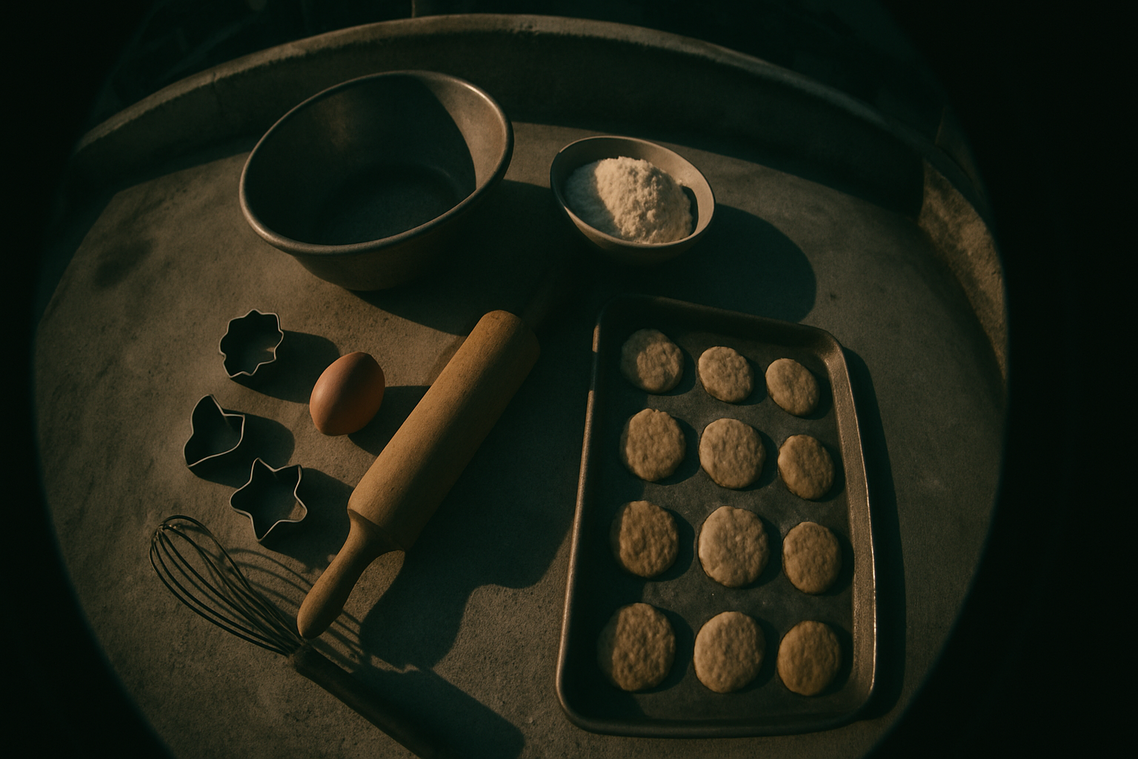
Your cookies aren’t burning because you’re a bad baker.
They’re burning because your equipment is lying to you.
I tested this myself. I baked the same cookie dough on three different sheet types at what my oven said was 350°F. The results? Dark pans produced cookies with bottoms that were 15 degrees hotter than the tops. Light aluminum pans? Nearly perfect heat distribution.
Here’s what the data shows.
The Workhorse: Baking Sheets
Heavy-gauge aluminum sheets in light colors are what professional bakeries use. There’s a reason for that.
Dark surfaces absorb more heat. A study from the American Test Kitchen found that dark pans can run 25-30°F hotter than light ones at the same oven temperature (which explains those burnt bottoms you keep getting).
Light-colored aluminum reflects heat instead of absorbing it. This gives you even baking and golden cookies instead of charred disasters.
Insulated sheets sound great in theory. Two layers with air between them. But that air gap actually works against you with cookies because it prevents proper browning and extends bake times unpredictably.
Surface Showdown: Parchment vs. Silicone
Both work. But they work differently.
| Feature | Parchment Paper | Silicone Mats |
|———|—————-|—————|
| Heat Distribution | Good | Excellent |
| Cookie Spread | Normal | Slightly less |
| Cleanup | Disposable | Reusable |
| Bottom Browning | Better | More gentle |
| Best For | Delicate cookies | Consistent batches |
I use parchment for scookiegear testing because it gives me consistent results batch after batch. Silicone mats are great if you bake often and want to cut down on waste.
The Truth About Your Oven
Your oven is probably a liar.
I’m serious. A 2019 Cook’s Illustrated study tested 20 home ovens and found that 18 of them were off by at least 25°F. Some were off by 50°F or more.
An oven thermometer costs about eight dollars. It’ll tell you what temperature your oven actually reaches versus what the dial claims.
When I started using one, my baking success rate jumped immediately. Turns out my oven runs 35°F hot. No wonder my cookies were always overdone.
Some people say you should just learn your oven’s quirks and adjust. Sure, that works. But why guess when you can know?
Finishing Touches: Cooling and Handling
You just pulled perfect cookies from the oven.
Now here’s where most people mess up.
They leave them sitting on that hot baking sheet. Maybe they’re tired or distracted or they figure a few extra minutes won’t hurt.
But those cookies keep cooking. The residual heat from the pan turns them dry and crumbly. All that work you put into getting the timing right? Gone.
I learned this the hard way after ruining an entire batch of chocolate chip cookies that looked perfect coming out of the oven.
Get yourself a wire cooling rack.
The moment your cookies are set enough to move (usually about two minutes), transfer them. The air circulation stops the cooking process immediately. Your cookies stay exactly how you want them.
For moving those warm cookies, you need a thin metal spatula. The flexible kind that can slide under without breaking anything. I keep mine within arm’s reach of the oven because timing matters here.
Now if you’re planning to frost or decorate, that’s different. An offset spatula makes the job so much easier. The angled blade gives you control without your knuckles dragging through wet icing (trust me on this one).
Once everything’s cooled, storage becomes your next concern.
Airtight containers aren’t optional. They’re the difference between cookies that stay fresh for a week and cookies that turn stale by tomorrow. Crispy cookies stay crisp. Chewy cookies stay soft.
The gear you use at scookiegear matters just as much as your recipe. Because what’s the point of baking great cookies if you can’t keep them that way?
Bake with Confidence and Consistency
You now have everything you need to conquer any cookie recipe.
No more guessing why one batch turned out perfect and the next one didn’t. No more frustration when your cookies spread too thin or come out burnt on the bottom.
The right gear changes everything. An oven thermometer tells you the truth about your temperature. Quality baking sheets distribute heat evenly. A good mixer gives you consistent dough every time.
These aren’t just nice-to-haves. They’re the difference between hoping your cookies turn out and knowing they will.
I’ve tested countless products to find what actually works. The tools that make baking easier and more predictable.
Ready to build your perfect cookie-baking arsenal? Explore scookiegear for curated collections of enthusiast-approved products. Start baking your best cookies today.
You came here looking for answers about what gear you really need. Now you have that clarity.
Take control of your baking. Get the right tools and watch your results improve with every batch. Newest Gaming Gear Scookiegear. Gaming Gear Scookiegear.