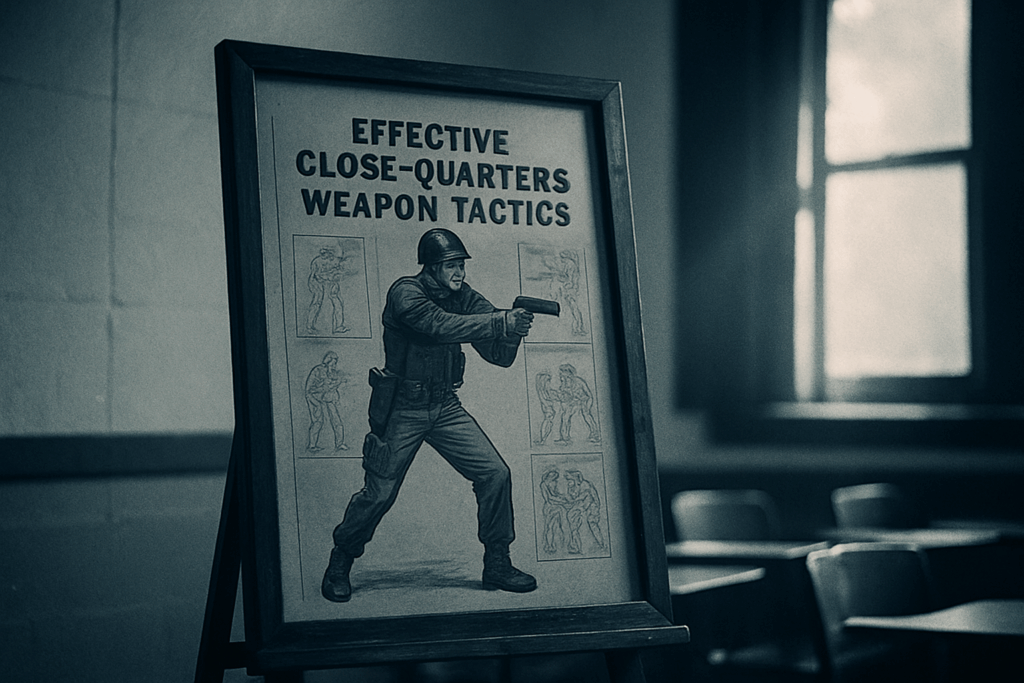
Why Shotguns Still Dominate in Tight Spaces
There’s nothing fancy about a shotgun and that’s the point. Simple controls, intuitive use, and brutal effectiveness are exactly what make it the go to tool for many professionals and civilians facing close quarter threats. One shell, one pump, and the job’s done. Reliability matters more than flash when the room’s small and the clock’s ticking.
In a tight hallway or cramped living room, psychological dominance happens fast. The distinct sound of a pump action racking a shell has stopped more fights than it’s started. That unmistakable report at close range doesn’t just drop targets it drops confidence. In CQB, confidence wins or loses the fight in seconds.
Shotguns also adapt well. Whether you’re clearing an office building, defending a townhouse at 3 A.M., or running a course during a tactical shoot, the platform’s modularity keeps it relevant. Swap barrels, change chokes, adjust optics, and you’re back in the game. Not every fight looks the same. Shotguns still thrive because they don’t care they just work.
Ammo Matters More Than You Think
When it comes to close quarters combat (CQB), the type of ammunition loaded into your shotgun is just as critical as the weapon itself. Your shots need to stop the threat quickly, and the wrong shell can either underperform or overpenetrate both dangerous outcomes in tight spaces.
Choosing the Right Shell for the Job
Different ammo types serve different tactical purposes. Here’s a breakdown:
Buckshot
Ideal for most CQB scenarios. Wide pattern spread at short range increases hit probability but still delivers significant stopping power.
Slug
For when you need precise, single projectile impact such as when punching through hard barriers or engaging slightly longer range targets.
Breaching Rounds
Frangible shells designed for destroying locks or hinges without endangering anyone behind the door. Never use for threat engagement.
Pattern Spread vs. Penetration
Your ammo selection affects how your shot behaves after leaving the barrel:
Tight Pattern (e.g., low recoil buckshot, tight choke)
Offers better control and accuracy, especially in hallways and confined spaces.
Wider Pattern
Increases hit probability but may reduce penetration and increase risk of collateral damage.
Slugs
High penetration great for barriers but risky in cluttered environments.
Speed Reload Tactics That Work
In a fight, reloading needs to be fast, intuitive, and reliable under pressure:
Ghost Loading
Adds an extra round under the carrier. Useful for gaining one more critical shot in emergencies.
Side Saddles
Keep spare shells on the receiver. Allows rapid access for reloading without fumbling.
Quad Load Technique
Common in competitive shooting but increasingly useful in dynamic tactical settings to get four shells loaded fast with practiced technique.
The bottom line: mastering your ammo and reload strategy isn’t optional in CQB it’s the edge that lets you stay in the fight while others are still racking shells.
Stance, Grip, and Movement
In a shotgun fight at bad breath distance, everything comes down to how you move and how you handle recoil. Elite trainers typically lean toward a squared stance for CQB shoulders forward, body behind the gun, weight slightly on the balls of the feet. It’s not pretty, but it soaks up recoil and gives you better control when you need to rapid fire. The bladed stance has a few fans in 3 gun circles, but in tight hallways or doorways, minimizing your profile doesn’t matter as much as being fast and stable.
Recoil control is a test of fundamentals. Tuck the stock high and tight into the shoulder pocket. Get your support hand far out on the pump or fore end for leverage. If you’re running a semi auto, lean in and let the gun run. Firing multiple rounds quickly should feel like controlled violence not chaos.
Pieing corners with a shotgun means using your angles like a surgeon, not a sledgehammer. Slice the room in tight increments while staying just outside of exposure. Keep the muzzle flat and ready not dipping low or swinging wide. And when it’s time to enter, commit without hesitation. There’s no half speed in a stack or solo clear.
Close quarters movement is about efficiency. Hug cover without hugging walls. Keep your elbows in, avoid flagging your muzzle, and always be thinking about what part of your body the enemy sees first. Vital zones neck, hips, knees should stay protected behind corners or environmental cover. Good movement keeps you alive. Sloppy movement gets you on someone’s bad day reel.
Breach, Clear, Transition

When it comes to breaching, forget Hollywood tropes. Real world door breaching with a shotgun is a calculated, high risk move. Specialty shells like frangible breaching rounds are designed to destroy locks and hinges without sending shrapnel flying back at you. Point aim matters. Go for the lock side edge, low and tight, angled slightly downward. It’s about speed, but also minimizing exposure.
Once the breach is made, slicing the pie becomes your best friend. This isn’t a rush. It’s deliberate. Expose only slivers of the room at a time as you pivot around the doorframe. Clear each visual slice before moving forward. Nothing wild, just steady progression. If you’re operating with a team, bounding techniques leapfrogging movement from cover to cover are key. Sync your motion. Communicate.
Now, things get tight. If your shotgun runs dry mid room, you don’t panic. You transition. Drop the long gun to sling, draw your sidearm clean. This has to be drilled to subconscious level: move, draw, reacquire threats. Smooth and fast wins here not frantic. Practicing with stress in training makes execution under pressure possible. Remember, the shotgun’s brutality makes it the opener but your pistol might be the finisher.
Close quarter mastery starts with mechanical precision and ends with mental discipline. Breach clean, clear smart, and know the moment to transition.
Red Dot? Bead? Why Optics Still Spark Debate
In close quarters, speed wins fights. Point shooting where you drive the gun toward the target and shoot without aligning traditional sights can be the difference between staying on your feet or not. It’s not fancy. It’s fast and brutal, and when distances shrink, it works. That said, aiming still matters when precision counts. If you’ve got a narrow hallway, a hostage scenario, or need to thread a shot over cover, a good red dot or low mounted optic keeps your sight picture sharp without lifting your head too high off the stock.
Mounting optics low helps with speed and recoil control. Keep your cheek weld tight and your optic in line with your dominant eye. Avoid tall mounts this isn’t 3 gun. Short barrels, tight corners, and fast transitions demand tight setups.
Lights and lasers? Use them. Darkness is a force multiplier for whoever owns it. A weapon light gives you eyes when your own aren’t enough. Laser designators, especially IR for NVG use, offer point fast accuracy when you don’t have time to aim. Just know your zero, don’t print where you don’t want to, and train under stress. Flicking a light on in your hallway at 3 a.m. when your adrenaline’s off the charts isn’t the time to be figuring out controls.
Bottom line: build your gun for how you fight. Simplicity, speed, and visibility win in CQB. Everything else is a gamble.
Train Like You Fight
Real world close quarter combat (CQB) is unpredictable and unforgiving. The best way to prepare for high stress scenarios is through structured, realistic training that mirrors actual conditions.
Build Muscle Memory with Live Fire Drills
Muscle memory is the foundation of confident, automatic performance under stress. Repetitive live fire training reinforces instincts and sharpens mechanical execution.
Focused repetition of reloads, malfunction clearing, and weapon transitions
Shooting from unconventional positions (kneeling, prone, or behind cover)
Movement drills combined with reactive target engagement
Tip: Practice regularly with the gear and loadout you plan to use under pressure. Familiarity breeds performance.
Simulate Real World Stress
Shooting static targets at an indoor range isn’t enough. The chaotic nature of CQB requires exposure to environmental stressors.
Introduce stress through:
Timers: Add urgency to force decision making speed
Environmental noise: Simulate chaos using alarms, music, or verbal commands
Low visibility drills: Engage in smoke, darkness, or strobe flashes
Disorientation exercises: Spin, sprint, or simulate mental pressure before making tactical decisions
These stressors help condition your nervous system to perform reliably under duress.
Blend Competitive Tactics into Combat Training
While real world combat isn’t a game, elements of competitive shooting can enhance CQB readiness. You can integrate techniques from competitive tactics to train smarter.
Use structured shooting stages to improve efficiency of movement and reloads
Track performance over time to identify weak spots
Apply strict safety and accuracy standards
This hybrid approach builds dynamic performance without sacrificing realism.
Speed vs. Precision: Find the Balance
Both speed and precision matter in CQB. Knowing when to be fast and when to be surgical is key.
Speed is critical during initial entry or suppression
Precision is vital around hostages, tight angles, or no shoot zones
Train for smooth transitions between rapid engagement and controlled shots
Drill Idea: Set up a stage with both speed focused targets and precision boxes. This forces real time decision making and movement control.
Training under stress isn’t just about faster shooting it’s about faster thinking under fire.
Tools, Loadouts, and Upgrades
In close quarter combat, the right shotgun makes all the difference. Top tier picks like the Beretta 1301 Tactical, Benelli M4, and Mossberg 590A1 dominate for a reason they’re reliable, fast cycling, and run hard under pressure. Each one has earned its spot in law enforcement, military, and 3 gun circuits. No frills? Sure. But in a hallway or stairwell, frills won’t save you.
Choke selection isn’t window dressing either. For CQB, cylinder or improved cylinder is king tight enough to keep patterns dense inside 15 yards, open enough for fast follow up shots. Skip full chokes unless you’re planning to thread buckshot through keyholes (you’re not). Mag tube extensions are mission critical. A few extra shells can buy time, solve problems, or keep you from having to do a mid fight reload.
Sling setups? Go two point, quick adjust. You’ll need mobility and control when breaching or transitioning to secondary. One point setups look cool until they bounce off your knee during a sprint or hang on a doorknob mid stack.
Gear matters, but only if it works with you. That’s why competitive tactics gear is starting to bleed into real world CQB training. Shotgun shell carriers from 3 gun circuits like Velcro cards and side mounted caddies are proving faster than standard load pouches. Why? Because under stress, simpler is faster, and muscle memory doesn’t argue.
At the end of the day, your setup should answer one question: can you move fast, shoot smart, and stay in the fight when it gets loud? If not change it.
Situational Awareness Wins Fights
In close quarter combat, pulling the trigger is the last step not the first. The real work happens before the shot: reading the environment, anticipating movement, and knowing exactly where your team is. If you charge into a room without processing it, you’re gambling with lives. Doorways aren’t just entry points they’re decision gates. Walls, corners, furniture, light angles all of it speaks. Learn to listen fast.
Coordinate with your team. Bounding works when everyone knows their role and sticks to it. Communication under stress doesn’t mean yelling it’s hand signals, eye contact, short commands that don’t bog you down. The tighter the space, the clearer your comms need to be. Friendly fire is a high risk in these environments. Knowing where your people are isn’t optional.
Tunnel vision is the killer of good judgment. You can train to hit center mass, but if your brain’s locked on a single threat, you’ll miss the guy creeping at your flank. Mental drills matter walkthroughs, scenario rehearsals, even force on force sims. Build habits so your mind can scan, assess, and act without freezing. In CQB, paranoia isn’t weakness it’s readiness. Situational awareness isn’t an accessory. It’s the core operating system.

 Ask Trevian Droshar how they got into esports coverage and you'll probably get a longer answer than you expected. The short version: Trevian started doing it, got genuinely hooked, and at some point realized they had accumulated enough hard-won knowledge that it would be a waste not to share it. So they started writing.
What makes Trevian worth reading is that they skips the obvious stuff. Nobody needs another surface-level take on Esports Coverage, Latest Gaming Gear Reviews, Upcoming Game Releases. What readers actually want is the nuance — the part that only becomes clear after you've made a few mistakes and figured out why. That's the territory Trevian operates in. The writing is direct, occasionally blunt, and always built around what's actually true rather than what sounds good in an article. They has little patience for filler, which means they's pieces tend to be denser with real information than the average post on the same subject.
Trevian doesn't write to impress anyone. They writes because they has things to say that they genuinely thinks people should hear. That motivation — basic as it sounds — produces something noticeably different from content written for clicks or word count. Readers pick up on it. The comments on Trevian's work tend to reflect that.
Ask Trevian Droshar how they got into esports coverage and you'll probably get a longer answer than you expected. The short version: Trevian started doing it, got genuinely hooked, and at some point realized they had accumulated enough hard-won knowledge that it would be a waste not to share it. So they started writing.
What makes Trevian worth reading is that they skips the obvious stuff. Nobody needs another surface-level take on Esports Coverage, Latest Gaming Gear Reviews, Upcoming Game Releases. What readers actually want is the nuance — the part that only becomes clear after you've made a few mistakes and figured out why. That's the territory Trevian operates in. The writing is direct, occasionally blunt, and always built around what's actually true rather than what sounds good in an article. They has little patience for filler, which means they's pieces tend to be denser with real information than the average post on the same subject.
Trevian doesn't write to impress anyone. They writes because they has things to say that they genuinely thinks people should hear. That motivation — basic as it sounds — produces something noticeably different from content written for clicks or word count. Readers pick up on it. The comments on Trevian's work tend to reflect that.