I’ve tested hundreds of gaming setups and here’s what I know: most people waste money on the wrong upgrades.
You’re probably wondering which component will actually make your games run better or feel more responsive. Maybe you’ve got $200 to spend. Maybe $2000. Either way, you don’t want to drop cash on something that barely moves the needle.
Here’s the truth: not all upgrades are equal. A $500 monitor can transform your experience more than a $500 graphics card in some cases. But nobody talks about that.
I’ve spent thousands of hours benchmarking hardware and testing components in real gaming scenarios. Not just reading spec sheets. Actually playing games and measuring what makes a difference you can feel.
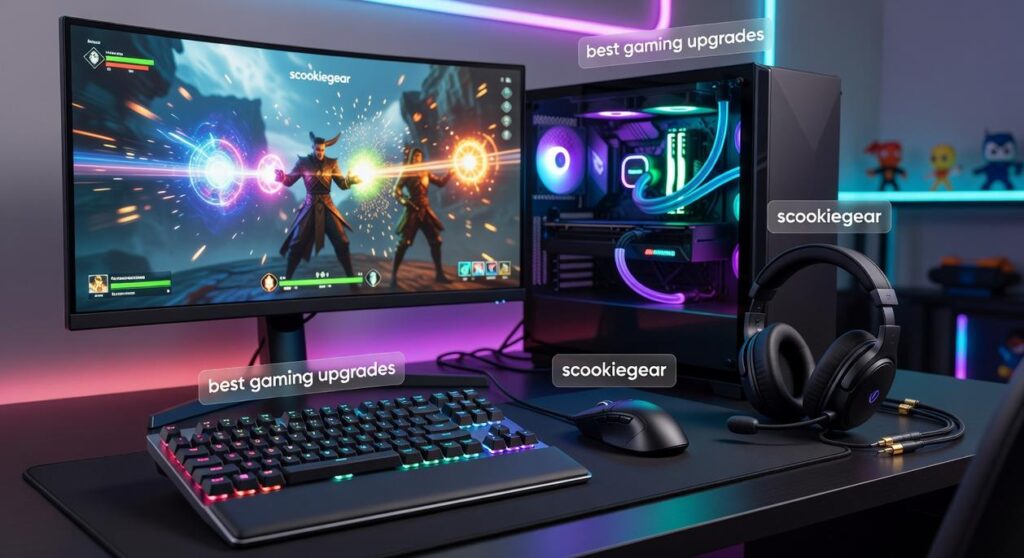
This guide breaks down what are the best gaming upgrades scookiegear based on what will give you the biggest performance boost or the most noticeable improvement to your experience.
I’ll show you which upgrades to prioritize first. Which ones can wait. And which ones are just marketing hype that won’t change how your games actually play.
You’ll learn exactly where your money goes furthest, whether you’re chasing competitive performance or just want games to look and feel better.
No fluff. Just the upgrades that matter and why they work.
Tier 1: The Core Performance Engine (GPU & CPU)
Let’s talk about what actually makes your games run smoothly.
Your GPU and CPU are the heart of your gaming rig. Everything else matters, but these two components do the heavy lifting when it comes to frame rates.
Upgrading Your Graphics Card (GPU)
Your graphics card renders everything you see on screen. Every texture, every shadow, every explosion.
Here’s when you know it’s time to upgrade. You’re playing at 1080p and can’t hit 60 FPS on medium settings. Or you just bought a new monitor and your current card can’t keep up.
I learned this the hard way a few years back. I bought a 144Hz monitor thinking my old GTX 1060 would handle it. Spoiler: it didn’t. I was getting maybe 70 FPS in most games, which made the expensive monitor pointless.
When I finally upgraded to a current-gen card, the difference was night and day. We’re talking jumps from 60 FPS to 120+ FPS in the same games at higher settings.
Why Your Processor (CPU) is Crucial
Your CPU handles game logic, physics calculations, and AI behavior. It tells your GPU what to render.
A weak CPU creates stuttering even when your GPU isn’t maxed out. You’ll see inconsistent frame times that make games feel choppy, even if your average FPS looks fine (something I didn’t understand until I experienced it myself).
The Synergy Rule
Here’s what most people get wrong about what are the best gaming upgrades scookiegear can offer.
They buy a top-tier GPU and pair it with a five-year-old CPU. Or vice versa.
Your components need to match. A $800 graphics card with a budget processor means you’re wasting money. The CPU can’t feed data fast enough, and your GPU sits there waiting.
Balance matters more than raw power in one component.
Tier 2: Your Window to the Game World (The Monitor)
Here’s something most people get backwards.
They drop two grand on a beast of a PC and pair it with a monitor from 2015. Then they wonder why their games don’t feel as smooth as they expected.
Think of it this way. Your PC is like a Ferrari engine. But if you’re looking through a dirty windshield, you’re not getting the full experience.
Your monitor isn’t just a screen. It’s the translator between your hardware and your eyes.
Some people argue that monitors don’t matter much. They say as long as you can see the game, you’re fine. Save your money for better components instead.
But that’s missing the point entirely.
Refresh Rate is Where It Starts
A 60Hz monitor shows you 60 frames per second. That’s what most people grew up with.
Then you jump to 144Hz. Suddenly you’re seeing more than twice the information. Movement becomes fluid in a way that’s hard to describe until you experience it.
240Hz? That’s when things get serious. Your reaction time doesn’t actually get faster, but you’re seeing enemy movements earlier. In competitive shooters, that matters.
I tested this myself in Valorant. The difference between 60Hz and 144Hz felt like taking off weights I didn’t know I was wearing.
Resolution vs Performance
Here’s the trade-off nobody talks about honestly.
4K looks gorgeous. But pushing that many pixels? Your PC has to work four times harder than at 1080p.
Most competitive players stick with 1080p or 1440p. They’d rather have 240fps than prettier textures (because in ranked matches, performance beats beauty every time).
Response time matters too. A 1ms response time means less motion blur when you whip around to check your six. Anything over 5ms and you start seeing ghosting. That’s when fast-moving objects leave trails behind them.
Adaptive Sync Saves Your Sanity
G-Sync and FreeSync do one simple thing. They match your monitor’s refresh rate to your GPU’s output.
Without it? You get screen tearing. That’s when the top half of your screen shows a different frame than the bottom half. It looks like someone took scissors to your display.
With adaptive sync turned on, everything syncs up. No tearing. No stuttering. Just smooth gameplay.
When you’re researching what are the best gaming upgrades scookiegear covers, the monitor should be near the top of your list.
Because all that PC power means nothing if you can’t see it properly.
Tier 3: Enhancing Control and Precision (Peripherals)
Here’s where things get physical.
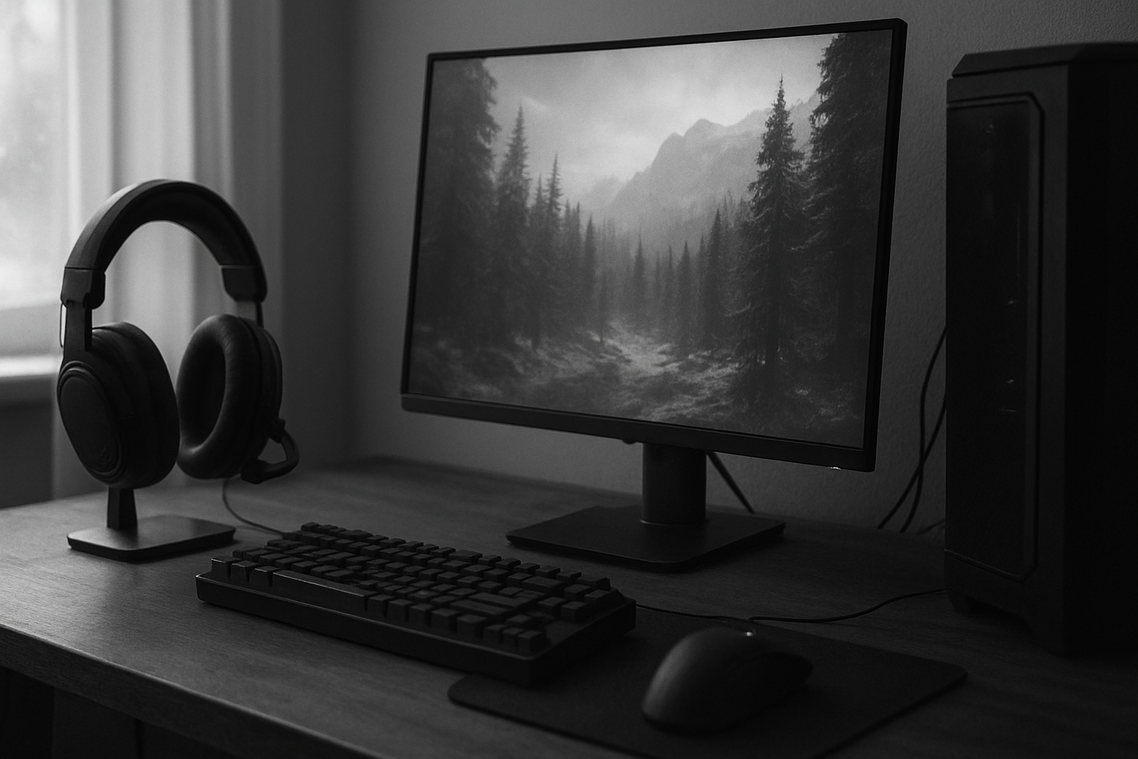
Your peripherals are the only parts of your setup you actually touch. And yet most gamers treat them like afterthoughts.
I see it all the time. Someone drops two grand on a PC build but keeps using that $15 mouse from 2018. Then they wonder why their aim feels off.
Some people argue that peripherals don’t matter much. They’ll say a pro gamer could beat you with a $10 mouse. And technically, they’re right.
But here’s what that argument misses.
You’re not a pro. Neither am I. We need every advantage we can get.
The Gaming Mouse
DPI numbers are mostly marketing noise.
What actually matters is the sensor. You want flawless 1:1 tracking so your cursor goes exactly where your hand moves. No acceleration, no smoothing, no weird jumps.
Weight matters too. A lighter mouse lets you make faster flicks and micro-adjustments without tiring out your wrist (trust me on this one).
And shape? That’s personal. Palm grip users need something that fills their hand. Claw grip players want a shorter back end. Fingertip grip demands something compact.
The newest gaming gear scookiegear reviews cover all these factors because they actually change how you play.
The Mechanical Keyboard
Membrane keyboards work. But they’re mushy.
Mechanical switches give you tactile feedback so you know exactly when a key registers. That split-second confirmation adds up over thousands of inputs per match.
Switch types break down like this:
- Linear switches are smooth with no bump (great for rapid tapping)
- Tactile switches have a bump you can feel (good for typing and gaming)
- Clicky switches make noise and have a bump (your teammates might hate you)
N-key rollover means every key press registers even when you’re mashing multiple buttons. Faster actuation means less travel distance before the key activates.
Here’s my prediction. Within two years, magnetic switches will become standard on mid-range boards. They’re already showing up on high-end models and the performance difference is noticeable.
The Gaming Headset
Sound is half the game.
Good spatial audio tells you exactly where footsteps are coming from. I’ve won rounds just by hearing someone reload behind a wall.
Open-back headsets sound more natural but leak audio. Closed-back designs isolate you better but can feel stuffy during long sessions.
Your mic matters more than you think. A clear voice keeps your team coordinated. A bad mic gets you muted.
I’m speculating here, but I think we’ll see what are the best gaming upgrades scookiegear shift toward wireless peripherals with latency that matches wired connections. The tech is almost there.
The gap between good and great peripherals is smaller than the gap between bad and good. But if you’re serious about improving, this tier gives you the control you need.
Tier 4: The Marathon Upgrades (Comfort & Environment)
Here’s what most people get wrong about gaming setups.
They think comfort is optional. Something you worry about after you’ve maxed out your FPS and response times.
But I’ve watched players with top-tier rigs lose matches because they couldn’t focus past hour two. Their back hurt. Their neck was stiff. They couldn’t track targets consistently because their mousepad was too small or their desk was a mess.
Some people argue that real gamers just push through discomfort. That if you need an expensive chair or a fancy desk setup, you’re soft.
I disagree.
Your body isn’t built to sit in the same position for six hours straight. Fighting that reality doesn’t make you tougher. It just makes you worse at the game.
The Ergonomic Gaming Chair
Look, a good chair won’t help you aim better in the next five minutes.
But proper lumbar support? That keeps your spine aligned so you’re not shifting around trying to get comfortable during a ranked match. Neck support means you can keep your head at the right angle without strain.
When you’re not thinking about your back pain, you can actually focus on the game. That’s the whole point.
The Right Surface
Your mousepad matters more than you think.
A large, high-quality pad gives you consistent tracking. No dead spots. No weird friction changes. Just smooth, predictable movement every time you flick or track a target.
And your desk? It needs to be stable and spacious. When you’re looking at what are the best gaming upgrades scookiegear options, people overlook this. A wobbly desk or one cluttered with junk means you can’t move freely. Your mouse bumps into things. Your keyboard shifts.
You need room to work.
Quality of Life Enhancements
These are the small things that add up.
A monitor arm lets you position your screen at exactly the right height and distance. No more neck strain from looking up or down all session.
A headset stand keeps your gear organized and accessible (instead of tangled on the floor). Cable management isn’t sexy, but a clean setup means fewer distractions and less frustration when you need to move or adjust something.
Check out scookiegear latest updates by simcookie for more on building a setup that actually works for marathon sessions.
The bottom line? These upgrades won’t show up in your frame rate. But they’ll show up in how long you can play at your best.
Building Your Perfect Gaming Setup, One Smart Upgrade at a Time
You now have a clear roadmap for upgrading your gaming equipment.
Start with the components that actually matter. The ones that deliver real performance gains.
I see too many gamers waste money on flashy upgrades that don’t move the needle. They buy what looks cool instead of what makes their games run better.
What are the best gaming upgrades scookiegear? The ones that target your specific bottlenecks.
This methodical approach saves you money. Each dollar you spend goes toward a more powerful and responsive gaming experience. No wasted cash on minimal returns.
Here’s what you need to do: Assess your current setup right now. Use this guide to identify your biggest bottleneck. Then plan your next upgrade with confidence.
You came here to figure out which upgrades matter most. Now you know exactly where to start.
Stop throwing money at random components and start building strategically. Homepage.